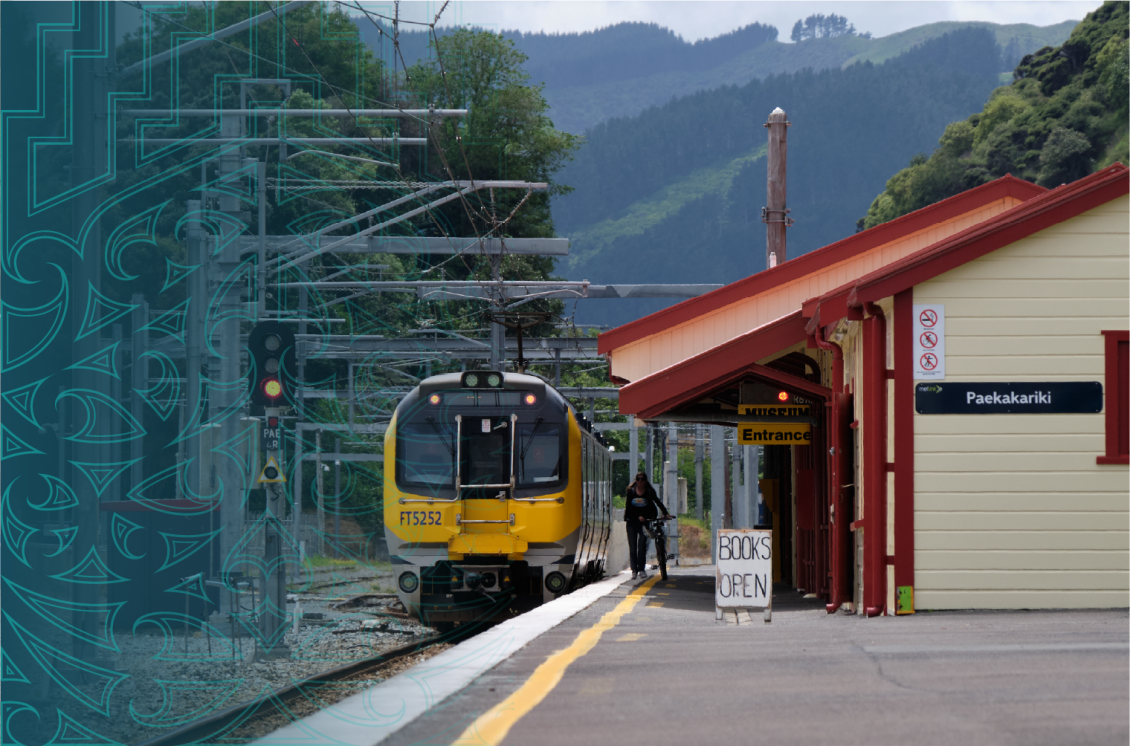
The delivery of critical services and infrastructure – like public transport and flood protection – will be compromised in the Wellington Region unless the Government reconsiders its proposed rates capping…

Chair of Greater Wellington, Councillor Daran Ponter, says that the Government’s rates cap proposal will likely increase costs, erode services and are already negatively impacting the region.
Many of this government’s announcements around local government are already impacting Greater Wellington’s financial position. In March this year, Standard & Poor’s downgraded Greater Wellington’s Global credit rating from AA+ to AA, citing the volatile nature of local government reform at present.
“It’s simple economics. Like all councils, our borrowing is secured against our rates revenue. Any cap or constraint on rates would limit our capacity to borrow and invest in essential infrastructure for environment management, flood protection and land management, provision of regional parks, and public transport.
“The mere signal of change has not been well received by international financial and market indicators. Any resulting future credit rating changes will result in an increase in our financing costs. This will simply stop progress and major investment in our region when approximately $90m in infrastructure spending represents 2% on rates.”
Deputy Chair of Greater Wellington, Councillor Adrienne Staples, says rural communities across the region want to understand the full impact of the Government’s Resource Management reform before this latest distraction.
“Ideally, the Government should concentrate on landing its Resource Management reform, giving iwi, farmers, landowners, developers and lifestyle property owners as well as the local government sector crystal clarity on where costs will be reduced, before muddying the waters further with hastily penned rate caps and reform,” says Cr Staples.
Chair of Greater Wellington’s Finance, Risk and Assurance Committee, Councillor Yadana Saw, says external cost pressures outside Greater Wellington’s immediate control will limit its ability to stay within the proposed caps.
“Like everyone out there, we’re feeling the pinch of rising electricity, fuel and insurance costs. When electricity prices surge 11.3% year on year - the largest annual increase since the late 1980s, it’s a delicate balancing act when our rates also have to cover ongoing maintenance contracts like the investment in flood stop bank assets that keep the biggest floodplain in New Zealand from swallowing up Hutt City.”
“We have a responsibility to keep our communities safe from weather events and natural disasters and it makes basic financial sense to invest in resilience than facing the cost of rebuilding and recovery at six times more the cost. This is why our credit rating matters so much.”
“When S&P can acknowledge we do a great job of managing the headwinds of these costs through fixing, hedging and other financial control, it’s baffling that our own government can’t factor this into its thinking, especially when most councils, businesses and households are expecting costs to rise in the coming months with interest rates at their lowest point in recent history and likely to climb,” says Cr Saw.
Chair of Greater Wellington’s Public Transport Committee, Councillor Ros Connelly, says communities should brace themselves for the likely impact of the Government’s short-sighted and overreaching proposals.
“Rates caps are just Central Government cuts in disguise. The only way to keep within the proposed targets and balance fixed cost pressures is to make drastic service cuts to public transport and the environment.”
“Limiting the ability of councils to fund our community’s essential assets and services through rates could see the costs being transferred elsewhere. We could see increased public transport fare increases and user charges imposed on lower income families, we will see risks being individualised and downgraded, and asset renewals being pushed onto future generations where they become more and more unaffordable.”
“Central Government should focus on keeping the economy ticking over and emerging from a protracted recession, leaving local democracy and funding to the locals,” says Cr Connelly.
The delivery of critical services and infrastructure – like public transport and flood protection – will be compromised in the Wellington Region unless the Government reconsiders its proposed rates capping…
Under section 119 of the Local Government (Rating) Act 2002, Wellington Regional Council, at its meeting on 27 August 2024, determined that it is desirable to set the 2024/25 Wellington…
Greater Wellington has recently discovered some of its general rates have been incorrectly applied and collected within Wellington city, since the 2019/20 financial year. The discovery during a rates-modelling exercise undertaken…